
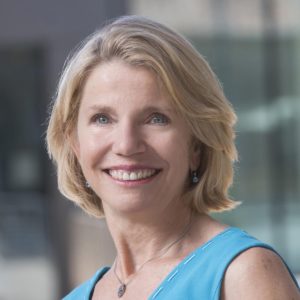
Catherine Fisk is the Barbara Nachtrieb Armstrong Professor of Law at UC Berkeley Law, where she teaches and writes on the law of the workplace, legal history, civil rights and the legal profession. She is the author of dozens of articles and four books, including the prize-winning Working Knowledge: Employee Innovation and the Rise of the Corporate Intellectual Property, 1800-1930, and Labor Law in the Contemporary Workplace. Her research focuses on workers at both the high end and the low end of the wage spectrum. She has written on union organizing among low-wage and immigrant workers as well as on labor issues in the entertainment industry, employee mobility in technology sectors, employer-employee disputes over attribution and ownership of intellectual property, the rights of employees and unions to engage in political activity, and labor law reform. She is the co-author, with UCI Law Professor Ann Southworth, of an innovative interdisciplinary casebook, The Legal Profession. Her current public service includes membership on the SEIU Ethics Review Board, the Board of Directors of the Wage Justice Center, and committees of the Law & Society Association. Prior to joining the founding faculty of UC Irvine School of Law, Fisk was a chaired professor at Duke Law School, and was on the faculty of the University of Southern California Gould School of Law and Loyola Law School in Los Angeles. She practiced law at a boutique Washington, D.C. firm and at the U.S. Department of Justice. She received her J.D. at UC Berkeley, and an A.B., summa cum laude, from Princeton University.
The theory of this unfair labor practice charge is that employer policies limiting the right of employees to engage in concerted activities for mutual aid and protection violate employees’ NLRA section 7 rights and also their rights to free exercise of religion. While the section 7 theory is familiar, the freedom of religion theory is novel, but it may be plausible. The major world religions celebrate the spiritual significance of work and communitarian values. It appears from the charge that Hobby Lobby’s policy purports to require employees to use the corporate dispute resolution system rather than collective action to challenge unfair working conditions, and employees believe that compliance with the employer’s policy violates their religion. First Amendment jurisprudence has not given religious people the right to challenge the enforcement of neutral laws of general applicability even where the laws restrict their ability to engage in conduct they believe to be required or encouraged by their religion. And the Title VII prohibition on religious discrimination likewise offers employees little protection against being required to adhere to neutral employer policies.
But the Religious Freedom Restoration Act, the Supreme Court said in its recent Hobby Lobby decision, amends all federal statutes—including, presumably, the NLRA—in this way: federal statutes that substantially burden the free exercise of religion may be enforced only if the statute is narrowly tailored to serve a compelling government interest. So, if Hobby Lobby says its Mutual Arbitration Agreement is enforceable under the Federal Arbitration Act and that the FAA trumps the NLRA’s protections for concerted activity, employees can argue that any interpretation of the FAA that substantially burdens their religious freedom to organize must be narrowly tailored to serve a compelling governmental interest. It’s not clear whether the government has a compelling interest in allowing employers to require employees to waive their religiously inspired rights to organize.
***
Catherine Fisk is the Chancellor’s Professor of Law at University of California, Irvine.




Daily News & Commentary
Start your day with our roundup of the latest labor developments. See all
February 20
An analysis of the Board's decisions since regaining a quorum; 5th Circuit dissent criticizes Wright Line, Thryv.
February 19
Union membership increases slightly; Washington farmworker bill fails to make it out of committee; and unions in Argentina are on strike protesting President Milei’s labor reform bill.
February 18
A ruling against forced labor in CO prisons; business coalition lacks standing to challenge captive audience ban; labor unions to participate in rent strike in MN
February 17
San Francisco teachers’ strike ends; EEOC releases new guidance on telework; NFL must litigate discrimination and retaliation claims.
February 16
BLS releases jobs data; ILO hosts conference on child labor.
February 15
The Office of Personnel Management directs federal agencies to terminate their collective bargaining agreements, and Indian farmworkers engage in a one-day strike to protest a trade deal with the United States.