
Benjamin Sachs is the Kestnbaum Professor of Labor and Industry at Harvard Law School and a leading expert in the field of labor law and labor relations. He is also faculty director of the Center for Labor and a Just Economy. Professor Sachs teaches courses in labor law, employment law, and law and social change, and his writing focuses on union organizing and unions in American politics. Prior to joining the Harvard faculty in 2008, Professor Sachs was the Joseph Goldstein Fellow at Yale Law School. From 2002-2006, he served as Assistant General Counsel of the Service Employees International Union (SEIU) in Washington, D.C. Professor Sachs graduated from Yale Law School in 1998, and served as a judicial law clerk to the Honorable Stephen Reinhardt of the United States Court of Appeals for the Ninth Circuit. His writing has appeared in the Harvard Law Review, the Yale Law Journal, the Columbia Law Review, the New York Times and elsewhere. Professor Sachs received the Yale Law School teaching award in 2007 and in 2013 received the Sacks-Freund Award for Teaching Excellence at Harvard Law School. He can be reached at [email protected].
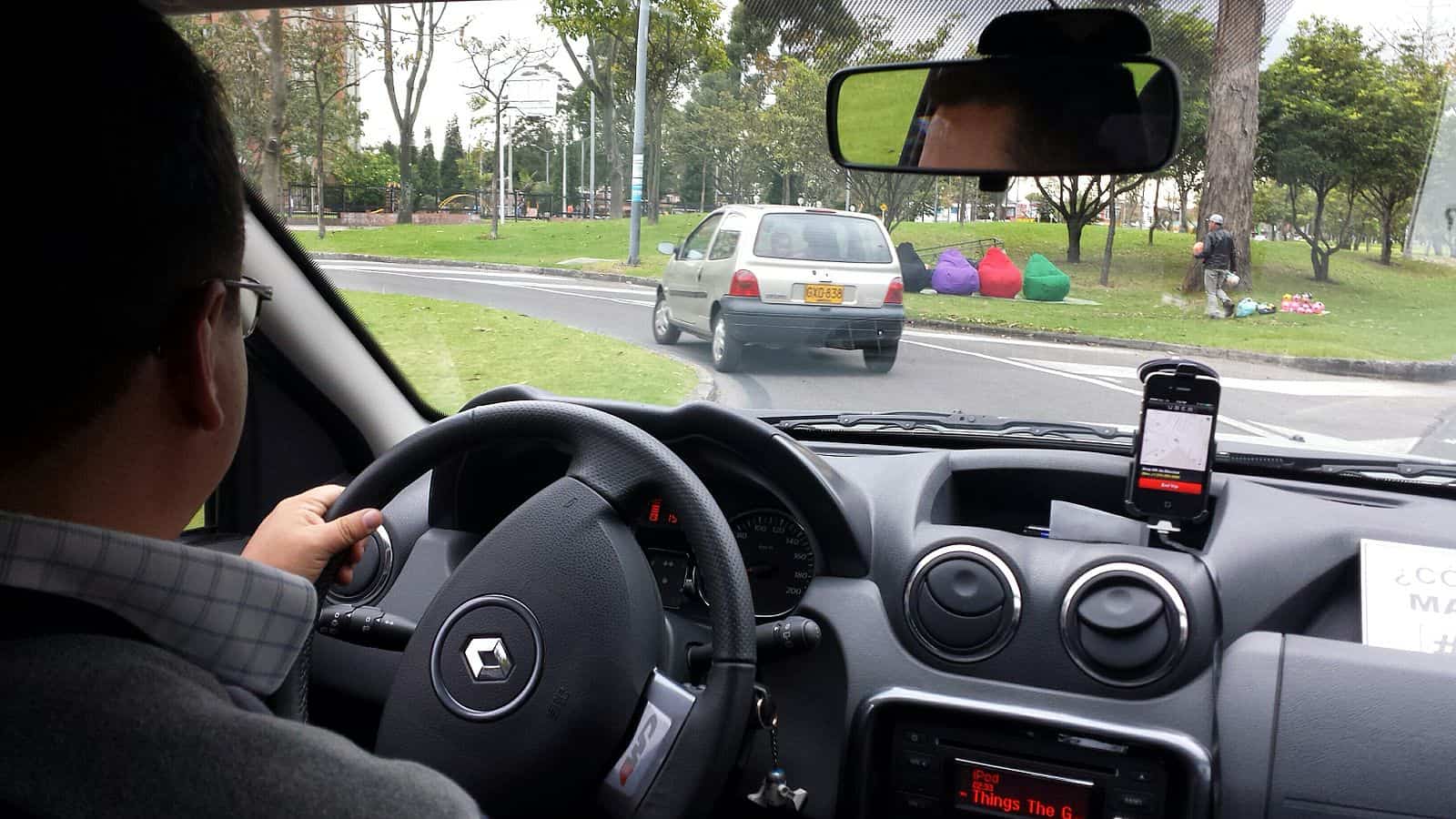
As Uber has done countless times before, it argued in a recent NYT op-ed that the firm can’t possibly classify its drivers as employees because doing so would undermine the core feature of its business model: “flexibility.” I have argued many times myself that Uber’s argument about flexibility is nothing more than a myth; that workers – including drivers – can be classified as employees and still operate with robust flexibility. Uber has now admitted as much. In yesterday’s NYT, we learned that Uber is considering transitioning to a business model according to which it would license its brand “to operators of vehicle fleets in California.” As Veena explains in a new post, this franchise model would allow Uber to continue hiding from its responsibility to the drivers. But, there’s another critical point here: under such a licensing and franchise model, the drivers would be employees of the vehicle fleets operating under Uber’s name. So, puzzle me this: if the Uber model can function with drivers classified as employees of the fleets, why can’t it function with drivers classified as employees of Uber? The answer is the same as it has always been: employment status is completely consistent with Uber’s successful operation. The firm doesn’t want anyone to believe this because employment status would require it to transfer additional income to the drivers. But that has nothing to do with flexibility. It has everything to do with their bottom line.



Daily News & Commentary
Start your day with our roundup of the latest labor developments. See all
December 8
Private payrolls fall; NYC Council overrides mayoral veto on pay data; workers sue Starbucks.
December 7
Philadelphia transit workers indicate that a strike is imminent; a federal judge temporarily blocks State Department layoffs; and Virginia lawmakers consider legislation to repeal the state’s “right to work” law.
December 5
Netflix set to acquire Warner Bros., Gen Z men are the most pro-union generation in history, and lawmakers introduce the “No Robot Bosses Act.”
December 4
Unionized journalists win arbitration concerning AI, Starbucks challenges two NLRB rulings in the Fifth Circuit, and Philadelphia transit workers resume contract negotiations.
December 3
The Trump administration seeks to appeal a federal judge’s order that protects the CBAs of employees within the federal workforce; the U.S. Department of Labor launches an initiative to investigate violations of the H-1B visa program; and a union files a petition to form a bargaining unit for employees at the Met.
December 2
Fourth Circuit rejects broad reading of NLRA’s managerial exception; OPM cancels reduced tuition program for federal employees; Starbucks will pay $39 million for violating New York City’s Fair Workweek law; Mamdani and Sanders join striking baristas outside a Brooklyn Starbucks.